
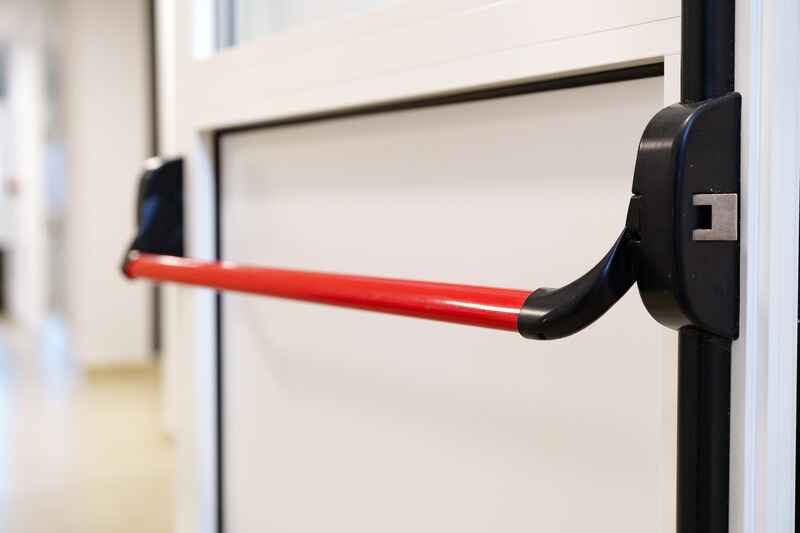
In public and commercial spaces, ensuring a safe and easy way for people to exit in emergencies is crucial. Panic bars, or push bars, are essential in making that quick exit possible. But do all buildings really need them? Let’s dive into why panic bars are often a necessary feature, particularly in high-traffic areas, and how they could make a difference for your business.
What Are Panic Bars?
Panic bars, also known as push bars, are horizontal bars installed on exit doors, enabling quick and effortless exit by simply pushing the bar. This device eliminates the need for twisting or turning a doorknob, which can be cumbersome in emergencies. Panic bars are designed to allow easy access from the inside while remaining securely locked from the outside.
In an emergency, such as a fire or natural disaster, having a straightforward exit mechanism like a panic bar can mean the difference between a smooth evacuation and a hazardous situation. Learn more about how panic bars work and why they’re a legal requirement in certain buildings.
Why Are Panic Bars Necessary?
1. Compliance with Safety Codes
Many state and federal safety codes require panic bars in specific types of buildings. This includes schools, theaters, hospitals, and other buildings where large groups gather. The Occupational Safety and Health Administration (OSHA) and National Fire Protection Association (NFPA) standards often mandate the installation of panic bars for quick evacuation routes.
Meeting these safety requirements is critical for the safety of your occupants, and it helps you avoid legal penalties. Not complying with safety codes could result in fines or closures, so it’s essential to ensure your facility is up to standard.
2. Efficient Emergency Exits
In emergencies, people tend to panic, which makes them less likely to follow standard exit procedures. Panic bars allow for a faster and more intuitive exit, helping people get to safety with a simple push. This reduces bottlenecks at exit points and ensures a smooth flow of movement toward safety. Explore more on the role of panic bars in emergency situations.
3. Enhanced Security
Beyond emergency scenarios, panic bars also offer day-to-day security benefits. Panic bars often lock from the outside, preventing unauthorized entry while still allowing easy egress. This feature is ideal for businesses that want to limit access but still provide a safe exit for employees or visitors inside the building.
4. Insurance Benefits
Some insurance providers may offer premium reductions for buildings that have enhanced safety features, such as panic bars. Installing these devices not only demonstrates that you prioritize safety but can also translate to savings on insurance costs. By making these simple upgrades, you could improve your insurance terms while keeping your premises compliant.
5. Positive Brand Image
For businesses open to the public, customer experience includes ensuring safety and accessibility. When customers or clients see that your premises are equipped with necessary safety features like panic bars, it creates an impression of a professional, responsible business. This is particularly important in industries such as hospitality and retail, where public perception significantly impacts customer retention.
When Is a Panic Bar Not Required?
While panic bars are mandatory in many commercial buildings, there are instances where they may not be necessary. Smaller offices or retail spaces with limited occupancy may not require panic bars if there is another means of egress. However, consulting with a professional locksmith or safety expert is essential to determine if your specific business setup meets all local and national safety standards.
DIY Panic Bar Installation: Is It Worth the Risk?
It can be tempting to handle panic bar installation as a DIY project, but these devices must be installed according to code to be effective and compliant. Improper installation can lead to malfunctioning, which could put people at risk in emergencies. Additionally, non-compliance due to improper installation can lead to fines or forced closures.
A professional locksmith can ensure your panic bars are installed correctly and meet all code requirements. Their experience means they’ll be able to advise on the best devices for your property and handle complex installations that meet legal and functional needs.
The Role of Professional Locksmiths in Panic Bar Installation
Professional locksmiths are not only skilled in lock installation but also in all aspects of safety compliance and functionality. Here’s why working with a certified locksmith, like Mr T’s Lock & Key, can be beneficial:
- Code Compliance: Locksmiths are knowledgeable about local and federal regulations, ensuring your building remains compliant.
- Quality Assurance: Professionals guarantee quality, reducing the risk of malfunction during critical times.
- Expert Advice: Locksmiths can recommend the best type of panic bar for your property, tailored to your specific needs.
Choosing the Right Panic Bar for Your Building
Panic bars come in different styles and functionalities. Some are equipped with alarms, which can notify building management if a door has been opened. Others may include locking mechanisms that allow them to be locked after hours. Consider the following when choosing a panic bar:
- Traffic Flow: High-traffic areas might benefit from panic bars that reset quickly to accommodate frequent use.
- Durability: Choose models that can withstand heavy use, especially in public buildings.
- Additional Security Features: Some panic bars offer integrated alarms or automatic locking mechanisms for added security.
Mr T’s Lock & Key, Serving Rhode Island
If your business requires panic bar installation or a safety assessment, Mr T’s Lock & Key, serving Rhode Island, offers professional locksmith services to ensure your building is both secure and compliant. With extensive experience in safety solutions, we help businesses create safer environments for employees and customers.